DOI:
https://doi.org/10.64539/msts.v2i1.2026.440Keywords:
Hybrid Machine Learning, Energy Demand Forecasting, Smart Infrastructure Systems, Optimization-Based Decision Support, Explainable Artificial Intelligence (XAI)Abstract
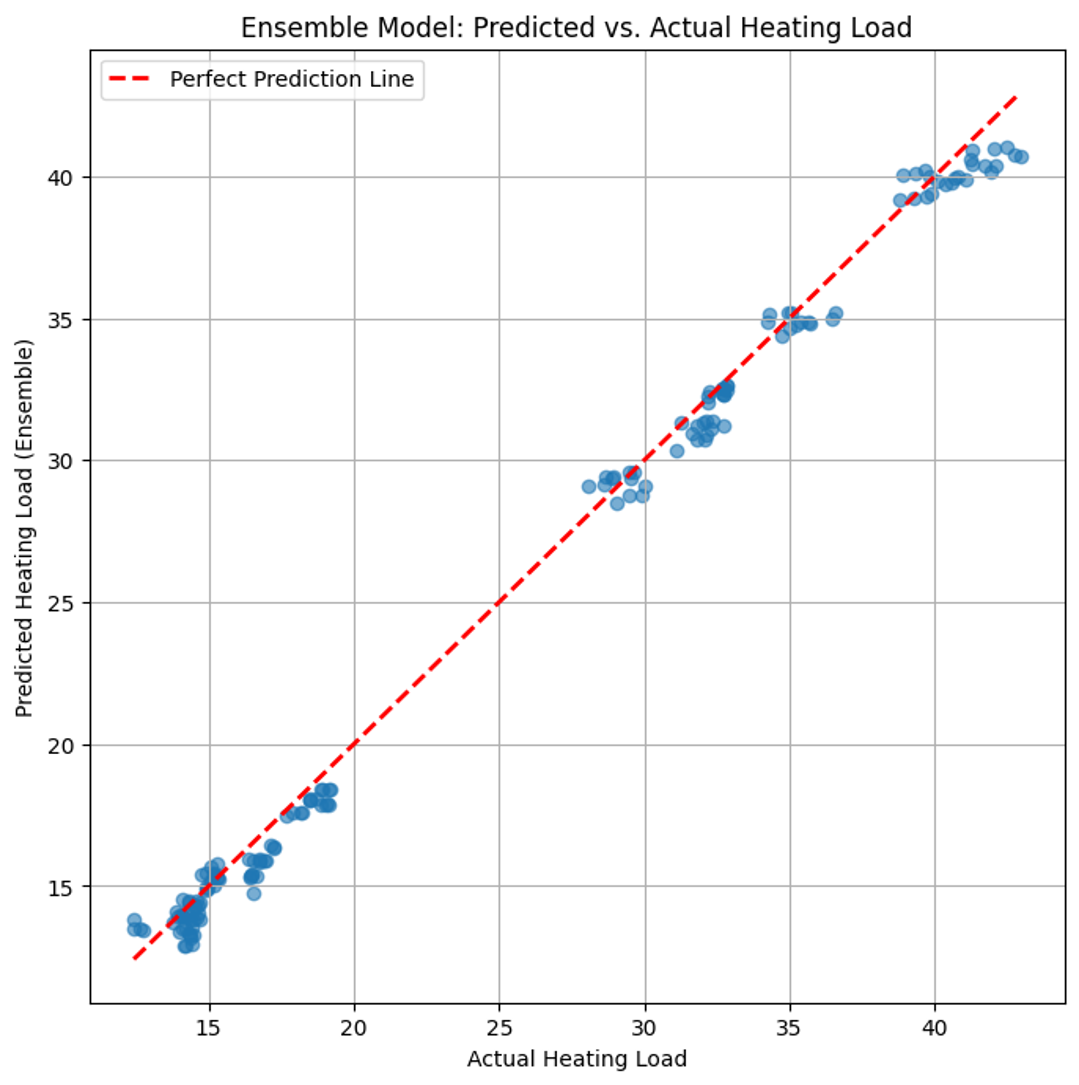
This study addresses the growing need for accurate and actionable energy demand forecasting in smart infrastructure systems, where data-driven decision-making is essential for efficiency, sustainability, and system reliability. Despite advances in machine learning-based forecasting, most approaches remain prediction-centric and are rarely integrated with operational optimization and decision-support mechanisms, limiting their real-world applicability. To address this gap, this study proposes a sequentially integrated hybrid machine learning–optimization framework that combines ensemble-based forecasting, optimization-driven energy allocation, and explainable artificial intelligence (XAI) within a unified architecture. The term hybrid denotes the integration of heterogeneous methodological components, while the framework is implemented as a pipeline in which forecasting outputs inform downstream optimization. The predictive module incorporates XGBoost and Long Short-Term Memory (LSTM) models, alongside an ensemble approach that operates within the forecasting stage to enhance robustness and generalization. The optimization component utilizes forecasted demand to minimize energy cost under demand and capacity constraints, while SHAP-based analysis improves interpretability and transparency. Empirical evaluation using the UCI Building Energy Efficiency dataset shows that XGBoost achieves the highest predictive accuracy (MAE = 0.429, RMSE = 0.613, R² = 0.996), while the ensemble model provides strong robustness (R² = 0.994). The integrated framework effectively smooths demand fluctuations, improves allocation efficiency, and identifies relative compactness and glazing area as dominant features. The results demonstrate that sequential integration of forecasting, optimization, and interpretability enhances predictive reliability, operational efficiency, and decision transparency.
References
[1] M. Shafiul Alam, F. S. Al-Ismail, A. Salem, and M. A. Abido, “High-level penetration of renewable energy sources into grid utility: Challenges and solutions,” IEEE Access, vol. 8, pp. 190277–190299, 2020. https://doi.org/10.1109/ACCESS.2020.3031481.
[2] S. K. Rathor and D. Saxena, “Energy management system for smart grid: An overview and key issues,” Int. J. Energy Res., vol. 44, no. 6, pp. 4067–4109, May 2020. https://doi.org/10.1002/er.4883.
[3] W. Fan et al., “A Bi-level optimization model of integrated energy system considering wind power uncertainty,” Renew. Energy, vol. 202, pp. 973–991, Jan. 2023. https://doi.org/10.1016/j.renene.2022.12.007.
[4] A. Zakaria, F. B. Ismail, M. S. H. Lipu, and M. A. Hannan, “Uncertainty models for stochastic optimization in renewable energy applications,” Renew. Energy, vol. 145, pp. 1543–1571, Jan. 2020. https://doi.org/10.1016/j.renene.2019.07.081.
[5] Z. Ullah, M. R. Elkadeem, K. M. Kotb, I. B. M. Taha, and S. Wang, “Multi-criteria decision-making model for optimal planning of on/off grid hybrid solar, wind, hydro, biomass clean electricity supply,” Renew. Energy, vol. 179, pp. 885–910, Dec. 2021. https://doi.org/10.1016/j.renene.2021.07.063.
[6] Q. Sun, Y. Fu, H. Lin, and R. Wennersten, “A novel integrated stochastic programming-information gap decision theory (IGDT) approach for optimization of integrated energy systems (IESs) with multiple uncertainties,” Appl. Energy, vol. 314, May 2022. https://doi.org/10.1016/j.apenergy.2022.119002.
[7] O. A. Al-Shahri et al., “Solar photovoltaic energy optimization methods, challenges and issues: A comprehensive review,” J. Clean. Prod., vol. 284, Feb. 2021. https://doi.org/10.1016/j.jclepro.2020.125465.
[8] M. Farghali et al., “Social, environmental, and economic consequences of integrating renewable energies in the electricity sector: a review,” Environ. Chem. Lett., vol. 21, no. 3, pp. 1381–1418, Jun. 2023. https://doi.org/10.1007/s10311-023-01587-1.
[9] X. Deng and T. Lv, “Power system planning with increasing variable renewable energy: A review of optimization models,” J. Clean. Prod., vol. 246, Feb. 2020. https://doi.org/10.1016/j.jclepro.2019.118962.
[10] C. Lingmin, W. Jiekang, W. Fan, T. Huiling, L. Changjie, and X. Yan, “Energy flow optimization method for multi-energy system oriented to combined cooling, heating and power,” Energy, vol. 211, Nov. 2020. https://doi.org/10.1016/j.energy.2020.118536.
[11] R. Hemmati, H. Mehrjerdi, and S. M. Nosratabadi, “Resilience-oriented adaptable microgrid formation in integrated electricity-gas system with deployment of multiple energy hubs,” Sustain. Cities Soc., vol. 71, Aug. 2021. https://doi.org/10.1016/j.scs.2021.102946.
[12] G. Oise and S. Konyeha, “Environmental impacts in e-waste management using deep learning,” Discover Artificial Intelligence, vol. 5, no. 1, p. 210, Aug. 2025. https://doi.org/10.1007/s44163-025-00376-9.
[13] G. P. Oise, J. A. Odimayomi, B. N. Unuigbokhai, B. E. Akilo, and S. A. Oyedotun, “Deep Learning for Cybersecurity Threat Detection in Industrial Process Control and Monitoring Systems,” Eng. Proc, vol. 117, no. 1, Feb. 2026, p. 43. https://doi.org/10.3390/engproc2025117043.
[14] G. P. Oise, “E-ViTNet: A lightweight vision transformer with oppositional cat swarm optimization for automated E-Waste sorting,” Next Research, vol. 6, p. 101373, Apr. 2026. https://doi.org/10.1016/j.nexres.2026.101373.
[15] S. A. Oyedotun, G. P. Oise, and C. E. Ozobialu, “Towards Intelligent Cybersecurity in SCADA and DCS Environments: Anomaly Detection Using Multimodal Deep Learning and Explainable AI,” Journal of Science Research and Reviews, vol. 2, no. 3, pp. 20–31, Jul. 2025. https://doi.org/10.70882/josrar.2025.v2i3.76.
[16] G. G. James, G. P, Oise, E. G. Chukwu, N. A. Michael, W. F. Ekpo, and P. E. Okafor, “Optimizing Business Intelligence System Using Big Data and Machine Learning,” Journal of Information Systems and Informatics, vol. 6, no. 2, pp. 1215–1236, Jun. 2024. https://doi.org/10.51519/journalisi.v6i2.631.
[17] K. Shafiei, S. G. Zadeh, and M. T. Hagh, “Planning for a network system with renewable resources and battery energy storage, focused on enhancing resilience,” J. Energy Storage, vol. 87, May 2024. https://doi.org/10.1016/j.est.2024.111339.
[18] Q. Sun, Z. Wu, W. Gu, T. Zhu, L. Zhong, and T. Gao, “Flexible expansion planning of distribution system integrating multiple renewable energy sources: An approximate dynamic programming approach,” Energy, vol. 226, Jul. 2021. https://doi.org/10.1016/j.energy.2021.120367.
[19] H. Mehrjerdi, S. Mahdavi, and R. Hemmati, “Resilience maximization through mobile battery storage and diesel DG in integrated electrical and heating networks,” Energy, vol. 237, Dec. 2021. https://doi.org/10.1016/j.energy.2021.121195.
[20] H. Qiu, W. Gu, P. Liu, Q. Sun, Z. Wu, and X. Lu, “Application of two-stage robust optimization theory in power system scheduling under uncertainties: A review and perspective,” Energy, vol. 251, Jul. 2022. https://doi.org/10.1016/j.energy.2022.123942.
[21] M. Sesini, S. Giarola, and A. D. Hawkes, “The impact of liquefied natural gas and storage on the EU natural gas infrastructure resilience,” Energy, vol. 209, Oct. 2020. https://doi.org/10.1016/j.energy.2020.118367.
[22] Z. Wu et al., “Multi-timescale voltage control for distribution system based on multi-agent deep reinforcement learning,” International Journal of Electrical Power and Energy Systems, vol. 147, May 2023. https://doi.org/10.1016/j.ijepes.2022.108830.
[23] J. Yun, Z. Yan, Y. Zhou, P. Zhang, and W. Hu, “Multi-time Collaborative Restoration for Integrated Electrical-gas Distribution Systems Based on Rolling Optimization,” CSEE Journal of Power and Energy Systems, vol. 10, no. 2, pp. 660–671, Mar. 2024. https://doi.org/10.17775/CSEEJPES.2020.03720.
[24] H. Liu, C. Wang, P. Ju, Z. Xu, and S. Lei, “A bi-level coordinated dispatch strategy for enhancing resilience of electricity-gas system considering virtual power plants,” International Journal of Electrical Power and Energy Systems, vol. 147, May 2023. https://doi.org/10.1016/j.ijepes.2022.108787.
[25] Y. Kou, Z. Bie, G. Li, F. Liu, and J. Jiang, “Reliability evaluation of multi-agent integrated energy systems with fully distributed communication,” Energy, vol. 224, Jun. 2021. https://doi.org/10.1016/j.energy.2021.120123.
[26] Q. Sun et al., “Resilience enhancement strategy for multi-energy systems considering multi-stage recovery process and multi-energy coordination,” Energy, vol. 241, p. 122834, Feb. 2022. https://doi.org/10.1016/j.energy.2021.122834.
[27] M. H. Shams, M. Shahabi, M. MansourLakouraj, M. Shafie-khah, and J. P. S. Catalão, “Adjustable robust optimization approach for two-stage operation of energy hub-based microgrids,” Energy, vol. 222, May 2021. https://doi.org/10.1016/j.energy.2021.119894.
[28] X. Zhao, X. Shen, Q. Guo, H. Sun, and S. S. Oren, “A stochastic distribution system planning method considering regulation services and energy storage degradation,” Appl. Energy, vol. 277, Nov. 2020. https://doi.org/10.1016/j.apenergy.2020.115520.
[29] A. Sharma, T. Pant, S. Kumar, And P. Kumar, “Machine Learning‐based Approaches for Energy Management and Optimization for Smart Cities,” in Strategic Framework and Intelligent Solutions for Sustainable Cities and Communities, Wiley, 2025, pp. 123–146. https://doi.org/10.1002/9781394406357.ch6.
[30] J. Aguilar, A. Garces-Jimenez, M. D. R-Moreno, and R. García, “A systematic literature review on the use of artificial intelligence in energy self-management in smart buildings,” Renewable and Sustainable Energy Reviews, vol. 151, p. 111530, Nov. 2021. https://doi.org/10.1016/j.rser.2021.111530.
[31] F. Deng et al., “TimesNet Model for Multi-industry Electricity Demand Forecasting,” 2024, pp. 64–75. https://doi.org/10.1007/978-981-97-0827-7_6.
[32] S. E. Ahmadi, M. Marzband, A. Ikpehai, and A. Abusorrah, “Optimal stochastic scheduling of plug-in electric vehicles as mobile energy storage systems for resilience enhancement of multi-agent multi-energy networked microgrids,” J. Energy Storage, vol. 55, Nov. 2022. https://doi.org/10.1016/j.est.2022.105566.
[33] H. Lotfi, P. Vafadoost, H. Rokhsati, and H. Parsadust, “An optimized machine learning approach for short-term electricity demand forecasting considering environmental and historical influencing factors,” Discover Applied Sciences, vol. 7, no. 9, p. 1015, Aug. 2025. https://doi.org/10.1007/s42452-025-07681-z.
[34] Y. Zhang, J. Hao, Z. Ge, F. Zhang, and X. Du, “Optimal clean heating mode of the integrated electricity and heat energy system considering the comprehensive energy-carbon price,” Energy, vol. 231, Sep. 2021. https://doi.org/10.1016/j.energy.2021.120919.
[35] P. Liu, T. Zhang, F. Tian, Y. Teng, and M. Yang, “Hybrid Decision Support Framework for Energy Scheduling Using Stochastic Optimization and Cooperative Game Theory,” Energies (Basel)., vol. 17, no. 24, p. 6386, Dec. 2024. https://doi.org/10.3390/en17246386.
[36] S. P. Tandel, P. Aniket, P. Bari, V. Mathew, K. S. Chaudhari, and S. Naik, “Short-Term Load Forecasting Using Machine Learning Algorithms,” 2023, pp. 515–525. https://doi.org/10.1007/978-981-99-1699-3_35.
[37] C. Ortigoza-Larroza, G. I. Rivas-Martínez, S. Grillo, and E. Benítez, “Residential Electricity Consumption Forecasting using Machine Learning and SARIMA Approaches: A Case Study of Paraguay,” International Journal of Energy and Water Resources, vol. 10, no. 1, p. 24, Mar. 2026. https://doi.org/10.1007/s42108-025-00438-9.
[38] M. Bao, Y. Ding, M. Sang, D. Li, C. Shao, and J. Yan, “Modeling and evaluating nodal resilience of multi-energy systems under windstorms,” Appl. Energy, vol. 270, Jul. 2020. https://doi.org/10.1016/j.apenergy.2020.115136.
[39] Z. Wu, P. Liu, W. Gu, H. Huang, and J. Han, “A bi-level planning approach for hybrid AC-DC distribution system considering N-1 security criterion,” Appl. Energy, vol. 230, pp. 417–428, Nov. 2018. https://doi.org/10.1016/j.apenergy.2018.08.110.